
What is Rhinoplasty Surgery?
Rhinoplasty is a surgical procedure aimed at altering the shape or structure of the nose. When exploring what the differences are between rhinoplasty options in Turkey, it is important to understand both the purpose of the surgery and the techniques used. In Turkey, patients can choose from various cosmetic and functional rhinoplasty options, each offering unique benefits depending on individual needs.
Cosmetic Rhinoplasty
Cosmetic rhinoplasty focuses on improving the external appearance of the nose. Surgeons reshape the nasal tip, refine the bridge, correct asymmetry, or adjust overall size and proportions.
Patients researching what are the differences between rhinoplasty options in Turkey often compare:
-
Different shaping techniques
-
Surgeon expertise and aesthetic style
-
Natural vs. more defined results
-
Available technologies (Piezo, ultrasonic, etc.)
Functional Rhinoplasty
Functional rhinoplasty addresses medical issues such as:
-
Deviated septum
-
Nasal valve collapse
-
Turbinate enlargement
-
Chronic breathing difficulties
Many clinics in Turkey combine cosmetic and functional techniques in one operation, which is a key difference often highlighted when comparing rhinoplasty options.
Open vs. Closed Rhinoplasty
One of the main distinctions among rhinoplasty options is the surgical approach:
Open Rhinoplasty
-
Small incision on the columella
-
Greater visibility and access
-
Preferred for complex reshaping
-
Common in Turkey for detailed tip refinement
Closed Rhinoplasty
-
All incisions inside the nostrils
-
No external scarring
-
Faster initial recovery
-
Often chosen for minor or moderate corrections
Understanding these differences helps patients determine which approach is better suited to their goals.
Surgical Techniques and Technology in Turkey
Turkey’s rhinoplasty options also differ in the techniques used:
-
Ultrasonic (Piezo) rhinoplasty for precise bone reshaping
-
Preservation rhinoplasty to maintain natural nasal structures
-
Ethnic rhinoplasty tailored for facial harmony
-
Revision rhinoplasty for correcting previous surgeries
These advanced options are a major reason patients compare rhinoplasty methods in Turkey.
Recovery Differences
Recovery time varies depending on the technique:
-
Swelling decreases significantly within 2–4 weeks
-
Full results appear in 6–12 months
-
Closed rhinoplasty often heals faster
-
Open rhinoplasty may require slightly longer recovery
For many patients evaluating what are the differences between rhinoplasty options in Turkey, recovery expectations are a key deciding factor.
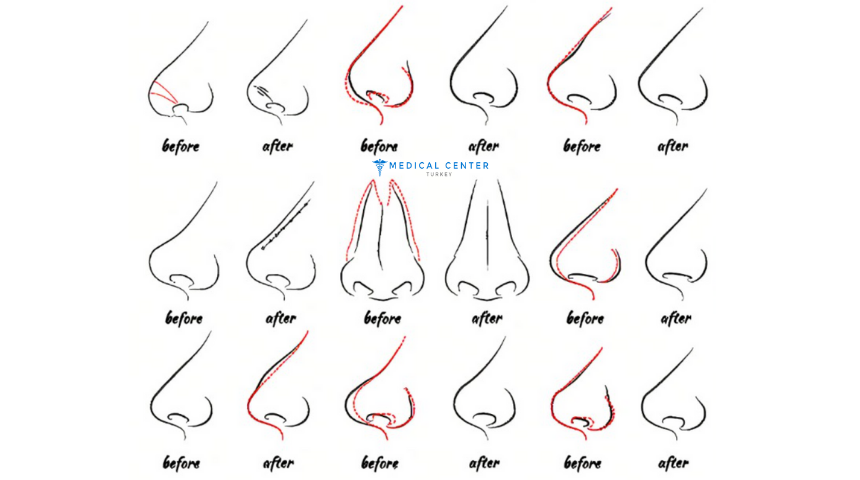
What are Different Types of Rhinoplasty Surgery?
-
Cosmetic procedures are among the most common when exploring what are the different types of rhinoplasty surgery.
Purpose: To enhance the appearance of the nose.
Common Changes:
-
Reducing or augmenting the size of the nose
-
Changing the shape of the nasal tip
-
Correcting asymmetry
-
Narrowing or widening the nostrils
-
Straightening a crooked nose
Techniques Used:
-
Reduction Rhinoplasty: Reduces nose size
-
Augmentation Rhinoplasty: Uses implants or cartilage to enhance projection
-
Tip Plasty: Focuses on refining the nasal tip
Functional Rhinoplasty (Medical or Reconstructive Rhinoplasty)
This category is essential when evaluating what are the different types of rhinoplasty surgery, especially for patients with breathing issues.
Purpose: To improve nasal function.
Common Reasons:
-
Deviated septum
-
Airway obstructions
-
Sinus issues
-
Post-traumatic deformities
Techniques Used:
-
Septoplasty: Straightens the septum
-
Turbinate Reduction: Improves airflow
-
Nasal Valve Surgery: Addresses valve collapse
Primary Rhinoplasty vs. Revision Rhinoplasty
Another important part of what are the different types of rhinoplasty surgery is distinguishing between first-time and corrective procedures.
-
Primary Rhinoplasty: First surgery for aesthetics or function
-
Revision Rhinoplasty: Secondary surgery to correct previous results
Closed Rhinoplasty
Closed rhinoplasty is often discussed when comparing what are the different types of rhinoplasty surgery based on incision techniques.
Technique: All incisions inside the nostrils.
Benefits:
-
No visible scars
-
Faster recovery
Limitations: Not ideal for complex reshaping
Open Rhinoplasty
Technique: Incision across the columella for full visibility.
Benefits:
-
Best for complex reshaping
-
More precise adjustments
Limitations: Small visible scar (usually fades)
Non-Surgical Rhinoplasty (Liquid Rhinoplasty)
A minimally invasive option often included in discussions about what are the different types of rhinoplasty surgery.
Purpose: Uses fillers to reshape the nose without surgery.
Common Improvements:
-
Filling depressions or bumps
-
Adding volume to the bridge
-
Refining the tip
Benefits: No downtime, quick, minimal risk
Limitations: Temporary results; not suitable for major structural changes -
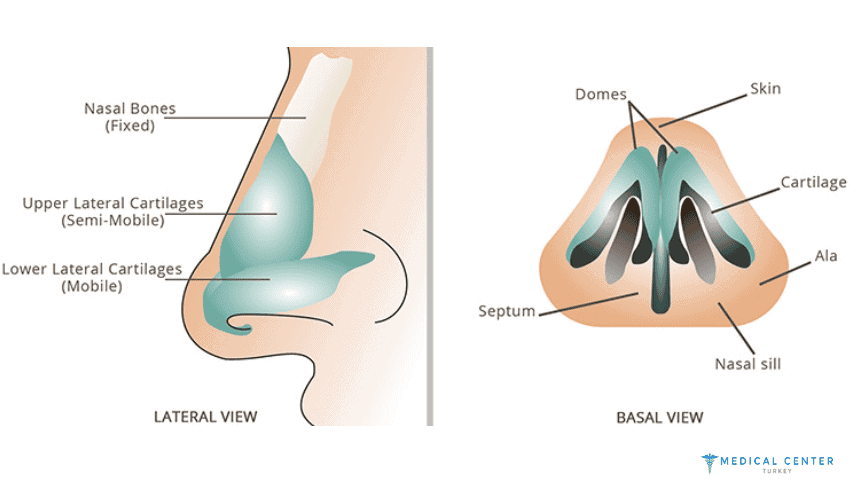 Ethnic Rhinoplasty
- Purpose: Tailored rhinoplasty that takes into account the unique nasal characteristics of different ethnic groups.
- Common Considerations:
- Maintaining ethnic identity while improving aesthetic appearance.
- For example, for people of Asian, African, or Middle Eastern descent, the goal might be to refine the nose while preserving important cultural features.
- Techniques Used: May involve augmentation, tip refinement, or nostril reshaping, depending on the specific needs of the patient.
- Purpose: To reconstruct the nose after traumatic injury, cancer, or congenital deformities.
- Common Causes: Severe injury, skin cancer removal, birth defects like cleft palate, or post-surgical defects.
- Techniques Used: Often involves grafts from other parts of the body (e.g., ear cartilage, rib cartilage) to restore the shape and function of the nose.
- Purpose: To add structural support, especially in cases of previous surgery, trauma, or congenital deformities.
- Techniques:
- Ear Cartilage Grafting: Cartilage taken from the ear to reshape or support the nose.
- Rib Cartilage Grafting: Cartilage harvested from the rib to provide additional structural support, especially for complex reconstructions.

What is the recovery process like for different rhinoplasty methods, and how long does it take to see results?
Rhinoplasty has come a long way by 2026, offering both traditional surgical and non-surgical options tailored to each patient’s anatomy and goals. The recovery journey varies significantly depending on whether you opt for open rhinoplasty, closed rhinoplasty, or a non-surgical nose job and understanding these differences can help set realistic expectations. Open rhinoplasty, which involves a small incision between the nostrils, is typically chosen for more complex reshaping. Swelling and bruising are more pronounced in the first 7–10 days, and most patients return to daily life within 2 weeks. However, subtle swelling especially at the tip of the nose can persist for several months. Full results are often visible after 6–12 months, as the soft tissues settle and contour naturally. In contrast, closed rhinoplasty (performed through internal incisions) generally offers a shorter recovery timeline. Since there's no visible external incision, patients experience less swelling and typically return to normal activities in 7–10 days. While early improvements are noticeable within weeks, final results can still take 3–6 months to fully emerge. Non-surgical rhinoplasty using dermal fillers to smooth bumps or refine contours requires virtually no downtime. Patients can resume most activities immediately, and results are visible right after the procedure. However, these effects are temporary and usually last between 12 to 18 months, depending on the filler used. In all cases, following post-procedure instructions, avoiding direct sun exposure, and refraining from strenuous activities are crucial for optimal healing. By 2026, enhanced techniques and personalized recovery plans have made rhinoplasty safer, smoother, and more predictable than ever. If you’re considering the best method for your needs, our Medical Center Turkey team is here to guide you with expert insight and comprehensive care at every step.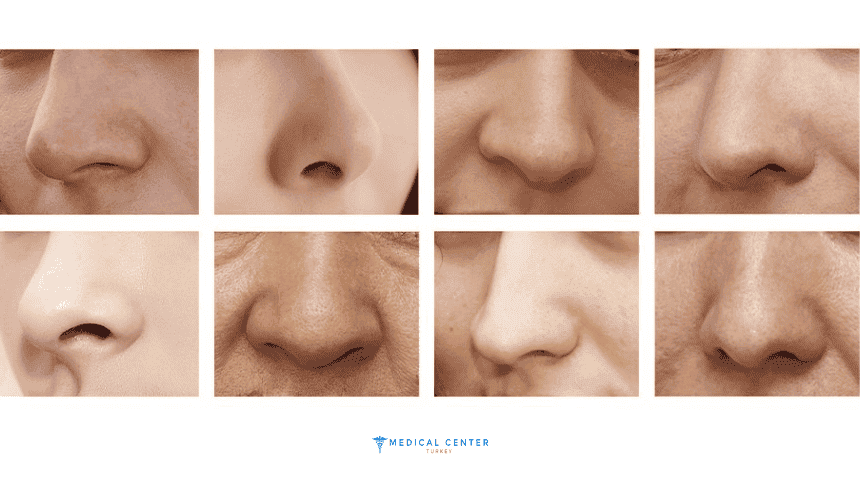
Is Turkey a Good Choice for Rhinoplasty Surgery?
Yes, Turkey is considered one of the top destinations for rhinoplasty and other cosmetic surgeries, and many people from around the world travel there for these procedures. Here are a few reasons why Turkey is a popular choice for rhinoplasty: Highly Experienced Surgeons- Turkey is home to many well-trained and experienced plastic surgeons who specialize in rhinoplasty. Many surgeons in Turkey have received their training in Europe or North America and are known for their expertise in both cosmetic and functional nasal surgeries.
- The surgeons often use advanced techniques, and many of them stay up-to-date with international trends and innovations in rhinoplasty.
- Rhinoplasty in Turkey is often significantly more affordable compared to countries like the US, UK, or many parts of Europe. This is due to the lower cost of living and healthcare services in Turkey, which allows high-quality procedures at a fraction of the price.
- Turkish clinics and hospitals offering rhinoplasty often meet international standards of hygiene, technology, and patient care. Many of the facilities are accredited and equipped with the latest medical technology, making them competitive on a global scale.
- Many patients who undergo rhinoplasty in Turkey report high satisfaction with the results. This is due to the combination of skilled surgeons, modern clinics, and personalized care throughout the process.
- Turkey is not only known for its medical services but also for its rich history, beautiful landscapes, and vibrant cities. Many patients choose to combine their surgery with a holiday, giving them the opportunity to relax and recover in a pleasant environment.
- Popular cities like Istanbul, Ankara, and Antalya have a high number of medical tourists, and you can find medical tourism agencies that assist with your whole journey, from arranging consultations to travel logistics.
- Turkey has a robust medical tourism industry, offering tailored packages that often include airport transfers, accommodation, and translation services. This makes the process of traveling for surgery much more convenient.