Understanding the Different Types of Hair Transplants and Which One Is Best?
Understanding the Different Types of Hair Transplants and Which One Is Best is an article that aims to give you all the information you do not know about Understanding the Different Types of Hair Transplants and Which One Is Best and more. We kindly shared the main headings with you;
What are the main types of hair transplant procedures available today?
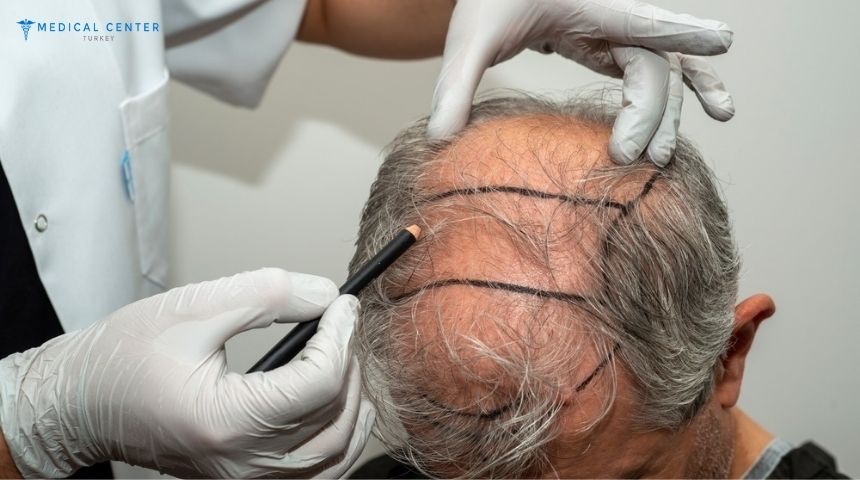
In Turkey, the most common hair transplant techniques are FUE (Follicular Unit Extraction), FUT (Follicular Unit Transplantation), DHI (Direct Hair Implantation), and SUT (Smart Hair Transplant). Each method offers unique advantages depending on the patient’s needs, the severity of hair loss, and the desired results.
- FUE (Follicular Unit Extraction): This is the most popular hair transplant method. It involves extracting individual hair follicles from a donor area (usually the back of the scalp) and transplanting them into the recipient area. FUE is minimally invasive, leaves no linear scar, and offers a faster recovery time compared to FUT.
- FUT (Follicular Unit Transplantation): In this traditional method, a strip of skin containing hair follicles is removed from the donor area and then dissected into smaller follicular units before being transplanted. FUT can harvest a large number of grafts in one session, but it leaves a linear scar that may be visible if the hair is worn short.
- DHI (Direct Hair Implantation): DHI is a refinement of the FUE method, where hair follicles are extracted and implanted directly into the recipient area using a special pen-like device (the Choi Implanter). This method does not require prior incisions, reducing the risk of bleeding and providing greater precision in follicle placement.
- SUT (Smart Hair Transplant): This is a newer technique that combines FUE with robotic technology. It uses a machine to extract follicles more efficiently and with high precision. SUT reduces the time and effort required for hair transplantation, offering a high level of accuracy and a quicker recovery.
Each of these methods has been designed to minimize scarring and provide natural-looking results. Choosing the right technique depends on various factors, including the patient’s hair type, the extent of hair loss, and the surgeon’s expertise.
How does FUE differ from FUT, and which one is more effective?
FUE (Follicular Unit Extraction) and FUT (Follicular Unit Transplantation) are the two most popular hair transplant techniques, each with distinct advantages and differences.
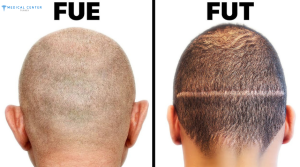
- FUE involves the extraction of individual hair follicles using a small punch device. These follicles are then implanted into the thinning or balding areas. FUE is less invasive than FUT and does not require the removal of a strip of skin, leaving no visible linear scar. It is ideal for patients who want to wear short hair and want to avoid the potential scarring that comes with FUT. Recovery time is generally quicker, and the risk of complications is lower.
- FUT, on the other hand, involves the surgical removal of a strip of scalp from the donor area. This strip is then dissected into individual follicular units and transplanted into the recipient site. While FUT allows for the extraction of a larger number of follicles in one sitting, it leaves a linear scar in the donor area, which can be noticeable if the hair is shaved short.
In terms of effectiveness, FUE is considered the more modern and widely used method due to its minimally invasive nature and faster recovery time. However, FUT can still be more suitable for patients who require a large number of grafts, as it can harvest more follicles in one procedure. The decision between FUE and FUT depends on the patient’s goals, hair loss extent, and whether they are willing to accept the possibility of a scar.
Is DHI better than other hair transplant methods?
DHI (Direct Hair Implantation) is often viewed as an advanced version of FUE, offering several benefits over traditional methods. While DHI is not necessarily “better” in all cases, it has distinct advantages:
- Precision and Control: DHI uses a special pen-like device, the Choi Implanter, to implant hair follicles directly into the recipient area. This allows for greater control over the depth, angle, and direction of the implanted follicles, leading to more natural results. The procedure also minimizes trauma to the scalp, reducing the risk of swelling and bleeding.
- No Incisions Required: Unlike FUE and FUT, DHI does not require pre-incision cuts in the scalp. This minimizes the risk of scarring and shortens the healing time. Since the follicles are implanted immediately after extraction, the procedure is faster, and the grafts have a higher survival rate.
- Faster Recovery: Since DHI is minimally invasive and requires no sutures, patients experience less discomfort and a quicker recovery time compared to FUT. The absence of scarring is another major benefit, making it an ideal choice for patients who prefer to keep their hair short.
Despite these advantages, DHI is typically more expensive and may not be suitable for patients with significant hair loss requiring large graft numbers. In comparison to traditional FUE or FUT, DHI offers more precision, but the technique may require longer surgery times due to the meticulous nature of the implantation process.
You can contact us if you want to get more detailed information about our packages related to this treatment. Just click on the link below.

What are the pros and cons of each hair transplant technique?
Each hair transplant method has its own set of advantages and disadvantages. Below is a breakdown of the pros and cons of the four most common techniques:
- FUE (Follicular Unit Extraction):
- Pros:
- Minimally invasive, leaving no linear scar.
- Faster recovery time.
- Suitable for patients who prefer shorter hair.
- Ideal for small to medium-sized areas of hair loss.
- Cons:
- Can be time-consuming, especially if a large number of grafts are required.
- May result in a slightly higher cost than FUT.
- Requires a skilled surgeon to ensure precision.
- Pros:
- FUT (Follicular Unit Transplantation):
- Pros:
- Allows for the extraction of a larger number of grafts in one session.
- Typically lower cost compared to FUE and DHI.
- Suitable for patients with advanced hair loss.
- Cons:
- Leaves a visible linear scar, which may be noticeable with short hair.
- Longer recovery time compared to FUE and DHI.
- Higher risk of complications such as infection or poor healing.
- Pros:
- DHI (Direct Hair Implantation):
- Pros:
- Higher precision and natural-looking results due to the direct implantation technique.
- Minimal scarring and no need for incisions.
- Faster recovery and less post-operative discomfort.
- Cons:
- More expensive than FUE and FUT.
- Time-consuming process due to the meticulous implantation technique.
- May not be suitable for large-scale hair loss cases.
- Pros:
- SUT (Smart Hair Transplant):
- Pros:
- Robotic technology improves accuracy and efficiency in follicle extraction.
- Minimizes the risk of human error, leading to more predictable outcomes.
- Faster recovery compared to FUT.
- Cons:
- Requires advanced equipment and may not be available at all clinics.
- Higher cost compared to traditional methods.
- May not be suitable for patients with very complex hair loss patterns.
- Pros:
Which hair transplant method offers the most natural-looking results?
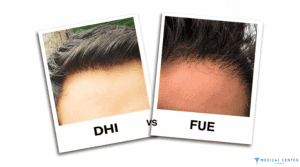
The most natural-looking results are generally achieved with DHI (Direct Hair Implantation) due to the precision and control it provides during follicle placement. The ability to implant follicles at the exact angle, depth, and direction of natural hair growth allows for a more seamless integration with existing hair, creating a highly natural aesthetic.
However, FUE can also provide natural results, especially with advanced techniques and a skilled surgeon. The key to achieving a natural look with FUE lies in the careful planning of follicle extraction and placement.
FUT can also result in natural outcomes, but the linear scar left behind in the donor area can detract from the overall appearance, especially if the patient wears their hair short.
Overall, DHI is often considered the best option for patients seeking highly natural and undetectable results, but each method can yield excellent results depending on the surgeon’s experience and the patient’s hair type and goals.
If you’re looking for the most dramatic, long-lasting transformation, full-body liposuction is the best choice. For those seeking non-invasive alternatives, options like CoolSculpting and laser lipolysis may be better. If you want to get more detailed information about this surgery, just click on the link below. We are always ready to help you.