Otoplasty in Turkey
Otoplasty in Turkey is an article that aims to give you all the information you do not know about Otoplasty in Turkey and more. We kindly shared the main headings with you;
What is otoplasty in Turkey?
Otoplasty, commonly referred to as cosmetic ear surgery, is a procedure designed to improve the size, shape, or position of the ears. It is especially preferred by individuals who are concerned about ears that protrude noticeably from the head. Thanks to advanced medical facilities and experienced surgeons, otoplasty in Turkey has become a popular option for both local and international patients.
The surgery is performed on the auricle, which is the visible outer part of the ear. The auricle is made up of cartilage folds covered with skin and begins developing before birth, continuing to grow throughout childhood. When the auricle does not develop in a typical way, it may lead to cosmetic concerns that can be addressed with otoplasty.
Patients may choose ear surgery in Turkey to correct:
Prominent ears
Asymmetrical ear shape
Large or misshapen auricles
Ears positioned too far from the head
Turkey is widely recognized for offering high-quality cosmetic procedures, modern hospitals, and internationally trained plastic surgeons. Combined with personalized treatment plans and patient-centered care, otoplasty in Turkey provides a reliable and effective solution for those seeking natural-looking ear correction results.
Before undergoing the procedure, a detailed consultation with a qualified surgeon is essential to evaluate ear structure and determine the most suitable surgical approach.
Who are the best candidates for the surgery?
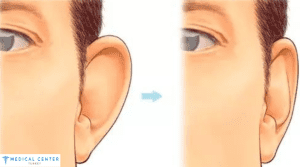
Usually, otoplasty is used on ears that are bigger or smaller than usual and protrude from the head having an irregular shape due to trauma, injury, or a birth defect in the structure. Protrude ears mean that they protrude (thrust forward) more than 2 cm or just over 3/4 of an inch. In addition, some people might have already undergone otoplasty but are dissatisfied with the outcome. They might decide to undergo another surgery as a result. Those who are suitable candidates for otoplasty should satisfy the following conditions,
- Being older than 5. After the ears have grown to their full size, usually after age 5 — otoplasty can be performed at any age into maturity. If splinting is started as soon as possible after birth, a kid with prominent ears and some other ear-shape concerns may be successfully treated.
- Being in excellent general health. An underlying illness can make complications more likely or slow healing down.
- Being a nonsmoker. Smoking can reduce the amount of blood flowing to the area, which might obstruct healing.
Why do ears protrude?
Congenital (present from birth) conditions account for most ear abnormalities The following are the main reasons behind protruding ears:
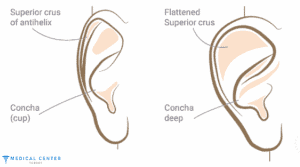
- A weakened antihelical fold. Your ear’s outside is shaped like the letter C. You can see what appears to be the letter Y inside the letter C. The antihelix is located at the base of the Y.
- The concha has an excess of cartilage. The bowl-shaped portion of the ear, known as the concha, is what pulls your ear away from your skull.
- Combination. The appearance of the ears is influenced by both concha excess and antihelical fold loss.
What are the types of otoplasty in Turkey?
There are several otoplasty options in Turkey, each designed to address different ear structure concerns and aesthetic goals. Depending on the individual’s needs, one or more of the following procedures may be recommended:
Ear Augmentation
Some individuals are born with ears that are small or not fully developed. In such cases, ear augmentation otoplasty in Turkey may be performed to enhance the size and shape of the outer ear, creating a more balanced and natural appearance.
Ear Pinning
Ear pinning is one of the most common forms of otoplasty. The aim of this procedure is to bring the ears closer to the head, making them less prominent. It is especially suitable for patients whose ears noticeably protrude from the sides of the head.
Ear Reduction
People with unusually large ears, a condition known as macrotia, may benefit from ear reduction surgery in Turkey. This procedure reduces the size of the ears to achieve better facial harmony and proportional balance.
What are the steps of procedure?
Before the operation
- For otoplasty, always choose a board-certified plastic surgeon. You must meet with your plastic surgeon for a consultation before your treatment.
- Be ready to discuss any current or former medical conditions, prescriptions you are currently taking, previous operations, and surgeries you have had.
- Your plastic surgeon will inspect your ears to determine their size, position, and form. They might also capture images or measurements.
- You will discuss the operation itself, the dangers it entails, and any associated costs. Your plastic surgeon will also be interested in knowing what you hope to achieve from the treatment.
- If something is confusing or you feel like you need more knowledge, don’t be hesitant to ask a question. Asking about your surgeon’s qualifications and years of expertise is also advised.
- Your doctor could advise you to make some preparations prior to your treatment if you’re a good candidate for otoplasty. Aspirin, NSAIDs, and herbal supplements should be avoided because they can worsen bleeding.
- Smoking reduces blood flow to the skin and might delay recovery. If you smoke, your doctor will advise you to give up smoking both before surgery and while you are recovering.
- Moreover, you’ll need to arrange for a driver and a companion for the first night after surgery so that you can heal.
During the operation
Otoplasty is usually performed as an outpatient procedure. Depending on the specifics and complexity of the procedure, it may take 1 to 3 hours. During the surgery, adults and older kids may receive local anesthetic along with a sedative. General anesthesia may be utilized in several circumstances. Younger kids having otoplasty are often advised to get a general anesthetic. The sort of otoplasty you receive will determine the specific surgical method that is used.
In general, an otoplasty entails:
- Making a cut, either inside the ear folds or on the back of the ear.
- Removal of cartilage or skin, folding and contouring of cartilage using long-lasting stitches, or grafting of cartilage to the ear are all examples of manipulating the ear’s tissue. Surgery is used to minimize swollen conchal cartilage and generate or increase the antihelical fold, which is located directly inside the rim of the ear, in order to correct projecting ears (the largest and deepest concavity of the external ear). Otoplasty incisions are often performed on the ear’s back surface. On the front of the ear, incisions are made within its folds to conceal them when they are essential. The freshly formed cartilage is created and fixed in place using internal, nonremovable stitches.
- Using stitches to close the wounds. The wound is closed using external stitches. Individualized techniques are used, taking care to prevent distorting other structures and an artificial “pinned back” appearance.
After the operation
- Your ears will be bandaged after otoplasty for support and protection. Most likely, you’ll have discomfort and irritation. Take painkillers as your doctor has prescribed. See your doctor right away if you take pain medication and your suffering worsens.
- Don’t put pressure on your ears by sleeping on your side.
- avoid rubbing or applying too much pressure to the wounds.
- Think about putting on button-down shirts or shirts with wide collars.
- Your doctor will take off your bandages a few days following the otoplasty. It’s likely that your ears will be swollen and red.
What are the side effects of the operation?
Throughout the healing process, frequent side effects include:
- Redness
- Tenderness, or pain in the ears
- Swelling
- Bruising
- Numbness or tingling You’ll be informed by your doctor when you can resume different activities.
Does otoplasty affect hearing?
Ear surgery is done to change the shape of the ear. As a result, it cannot alter or enhance hearing. Alternatively, this technique may aid in shrinking excessively big ears, sculpting malformed ears, repositioning protruding ears closer to the skull, and/or repairing physically injured ears.
What is the recovery procedure look like?
You’ll see an immediate change in the look of your ears as the bandages are taken off. As a result of the ear’s permanent position closer to the skull, surgical scars are either well concealed behind the ear or behind the ear’s natural creases. These modifications are ongoing. Ask your surgeon about the potential of revision surgery if you’re not happy with the results. Remember that,
- During a few weeks, you might need to sleep with a loose headband covering your ears for about 4-6 weeks after the bandages get removed. This headband is suitable for use at night and will prevent you from dragging your ears forward if you will roll over in the bed.

- Ask your doctor when or if they plan to remove your stitches. Some stitches naturally fall out. In the weeks following the procedure, some must be removed in the doctor’s office.
- To learn about when you can resume your everyday activities like bathing and exercise, see your doctor.
Your surgery’s success depends on you adhering to your doctor’s recommendations. It’s crucial that during the healing process, the surgical incisions are not subjected to extreme force, sunshine, tanning bed light, abrasion, or mobility. You’ll receive detailed instructions on self-care from your doctor. Following your plastic surgeon’s advice and showing up for follow-up appointments on time is crucial for recovery.
What are the advantages of otoplasty?
The following are some advantages of otoplasty,
- Gain in self-assurance: Many otoplasty patients are self-conscious about the way their ears look, particularly in public. At this point, auricle reduction or ear pinning can improve looks, increasing self-esteem.
- Safe: The outer ear’s tissue is surprisingly resilient and quick to heal after surgery. Every year, thousands of adults and kids safely benefit from otoplasty.
- Correction of large or abnormally protruding ears: Otoplasty is used to treat prominent ears. The effects of the procedure remain after the patient recovers for the rest of their life.
- A solution to a variety of issues: Otoplasty is a strong method that can address a wide range of problems with just one operation. Patients who have ears that protrude, are excessively big for the rest of their heads or were not properly developed as children can benefit from it.
Invest in your health, invest in a brighter future. Our comprehensive medical programs deliver real results, while you indulge in the beauty and serenity of our destination.
What are the risks?
Otoplasty includes dangers, much like any other major surgery, including the possibility of bleeding, infection, and a negative anesthetic reaction. Otoplasty also carries the following dangers,
- Scarring. Even while scars are permanent, you won’t likely see them because they’ll be covered behind or in the wrinkles of your ears.
- Asymmetry in the ear position. This might take place as a result of adjustments made throughout the healing process. Moreover, preexisting asymmetry might not be successfully treated by surgery.
- Changes in skin sensation. Your ears may need to be moved during otoplasty, which may temporarily impair localized skin sensation. Rarely, changes may be irreversible.
- Allergic response. The surgical tape or other substances used during or after the treatment could cause an allergic response. difficulties with the stitches. The stitches that were used to fix the ear’s new shape can push through the skin and need to be taken out. The skin that is being damaged by this may become inflamed. You might consequently require more surgery.
- Overcorrection. Otoplasty can produce an artificial look that gives the appearance that ears are pulled back.
What are the key takeaways about otoplasty?
Otoplasty is an ear cosmetic procedure. You can utilize it to modify your ears’ size, shape, or placement. Otoplasty is performed for a variety of reasons. They include having ears that stick out, are larger or smaller than they should be, or are shaped differently. Otoplasty comes in a few distinct forms. Your needs will determine the precise type and approach employed. Usually, recovery takes many weeks. Find a board-certified plastic surgeon in your neighborhood if you’re thinking about getting an otoplasty. Try to concentrate on surgeons with much otoplasty experience and highly satisfied patients.
Why choose Turkey for otoplasty?
You might be wondering why Turkey is a preferable country for ear correction surgery. The country’s advantageous aspects have a major impact on this. High-quality services at competitive pricing are being offered by Turkish clinics. Turkey’s cheap cost of living, low taxes, favorable currency exchange rates, and government subsidies are the critical factors that make the country popular for surgery. Also, Turkish clinics provide a comprehensive bundle at an affordable cost that includes a variety of therapies that would be more expensive when purchased separately.
What is the cost of otoplasty in Turkey?
Many patients considering otoplasty in Turkey wonder about the overall cost of the procedure. While exact pricing can vary, the cost of otoplasty generally depends on several important factors rather than a single fixed fee.
The total cost of ear surgery in Turkey may be influenced by:
The experience and expertise of the plastic surgeon
The type of otoplasty performed (ear pinning, ear reduction, or ear augmentation)
The medical facility or hospital where the procedure takes place
The patient’s individual ear structure and surgical needs
In addition to the surgical procedure itself, there may be additional expenses associated with otoplasty. These can include anesthesia services, prescribed or over-the-counter medications, pre-operative evaluations, and post-operative care. The level of comfort and services offered by the chosen medical facility may also affect the overall cost.
Since otoplasty is typically considered a cosmetic procedure, it is not usually covered by health insurance plans. This means patients are often responsible for covering the expenses themselves. However, some clinics and plastic surgeons in Turkey may offer flexible payment options to help make the procedure more accessible.
In certain cases where otoplasty is performed to correct a medical or functional issue, insurance coverage may be possible. For the most accurate information, it is recommended to consult directly with a qualified surgeon to receive a personalized treatment and cost assessment.
You can easily request a personalized treatment plan and receive your free quote by clicking the image below.

For more detailed information and to inquire about anything you are curious about, feel free to contact us anytime. Click the link below to get in touch with our team.