What is Hair Transplantation?
Hair transplantation is a surgical procedure aimed at addressing hair loss by moving hair follicles from one part of the body (often referred to as the donor site) to the bald or balding parts of the scalp (the recipient site). This procedure is commonly used to treat male pattern baldness, although it can also be used to restore hair in other areas of the body, such as the eyebrows, eyelashes, beard, and chest. There are two primary techniques used in hair transplantation:- Follicular Unit Transplantation (FUT): Also known as strip harvesting, this technique involves removing a strip of scalp from the donor area, typically from the back or sides of the head, where hair growth is usually denser. The strip is then dissected into individual follicular units containing one to four hairs each, which are then transplanted into the recipient site.
- Follicular Unit Extraction (FUE): FUE involves harvesting individual follicular units directly from the donor area using a small punch tool. This technique does not require the removal of a strip of scalp and leaves minimal scarring.
How does Hair Transplantation Work?
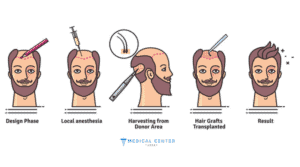
Hair transplantation works by relocating hair follicles from areas of dense hair growth (the donor site) to areas where hair loss or thinning has occurred (the recipient site). The process typically involves the following steps:- Initial Consultation: The process begins with a consultation with a hair transplant surgeon, during which the surgeon assesses the extent of hair loss, evaluates the quality and density of the donor hair, and discusses the patient's expectations and goals.
- Preparation: Before the procedure, the patient's scalp prepared for surgery. Local anesthesia is administered to numb the donor and recipient areas, ensuring the patient's comfort during the procedure.
- Donor Hair Harvesting: Depending on the chosen technique (FUT or FUE), the surgeon extracts hair follicles from the donor area. In FUT, a strip of scalp containing hair follicles is removed from the donor site, usually from the back or sides of the head. In FUE, individual follicular units are extracted directly from the donor area using a small punch tool.
- Follicle Preparation: Once the hair follicles are harvested, they are carefully dissected under a microscope to separate individual follicular units containing one to four hairs each. This step is crucial for ensuring the viability and success of the transplanted follicles.
- Recipient Site Creation: The surgeon creates tiny incisions or recipient sites in the bald or thinning areas of the scalp where the hair will be transplanted.
- Hair Transplantation: The prepared follicular units are then meticulously transplanted into the recipient sites using specialized instruments. The surgeon pays close attention to the density, direction, and distribution of the transplanted hair to achieve the desired aesthetic outcome.
- Post-Transplant Care: After the transplantation is complete, the patient is provided with instructions for post-operative care, including how to care for the transplanted area, medications to prevent infection and promote healing, and when to follow up with the surgeon.
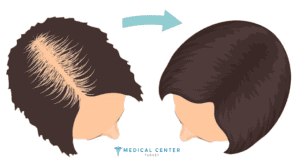
- Recovery and Growth: Over the following weeks and months, the transplanted hair follicles gradually take root and begin to grow new hair. Initially, the transplanted hairs may shed, but this is a normal part of the healing process. Within several months, new hair growth should become visible, and the full results of the transplantation can be appreciated within a year.
What is the Most Common Method for Hair Transplantation?
The most common method for hair transplantation is Follicular Unit Extraction (FUE). This technique has gained popularity due to its minimally invasive nature and the absence of a linear scar, which is typically associated with Follicular Unit Transplantation (FUT), the other common method. In FUE, individual follicular units containing one to four hairs are harvested directly from the donor area using a small punch tool. The punches create tiny circular incisions around the follicular units, which are then extracted and transplanted into the recipient site. FUE allows for precise extraction of follicular units without the need for a linear incision, resulting in minimal scarring and a quicker recovery time compared to FUT. FUE has become the preferred method for hair transplantation for many patients and surgeons due to its advantages in terms of minimal scarring, faster healing, and the ability to harvest grafts from various parts of the body, such as the beard or chest if needed. However, the suitability of FUE versus FUT depends on factors such as the patient's hair characteristics, the extent of hair loss, and the surgeon's expertise. You can easily request a personalized treatment plan and receive your free quote by clicking the image below.